Maria van Bruggen Becomes a Disciple of Master Kim Wu
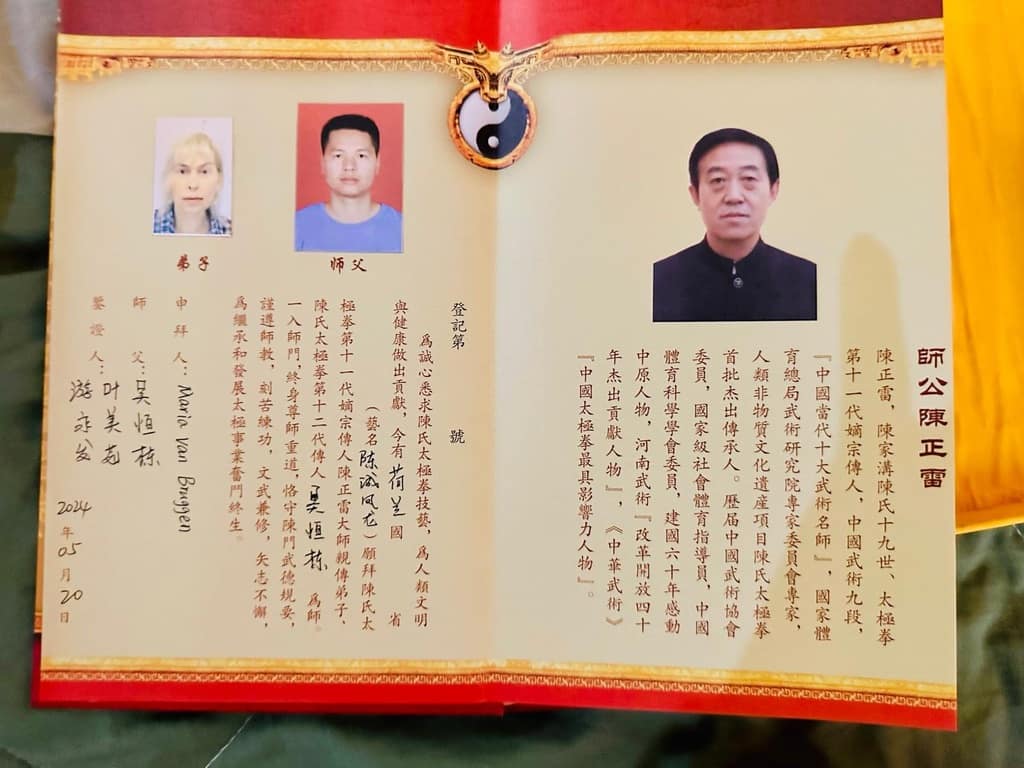
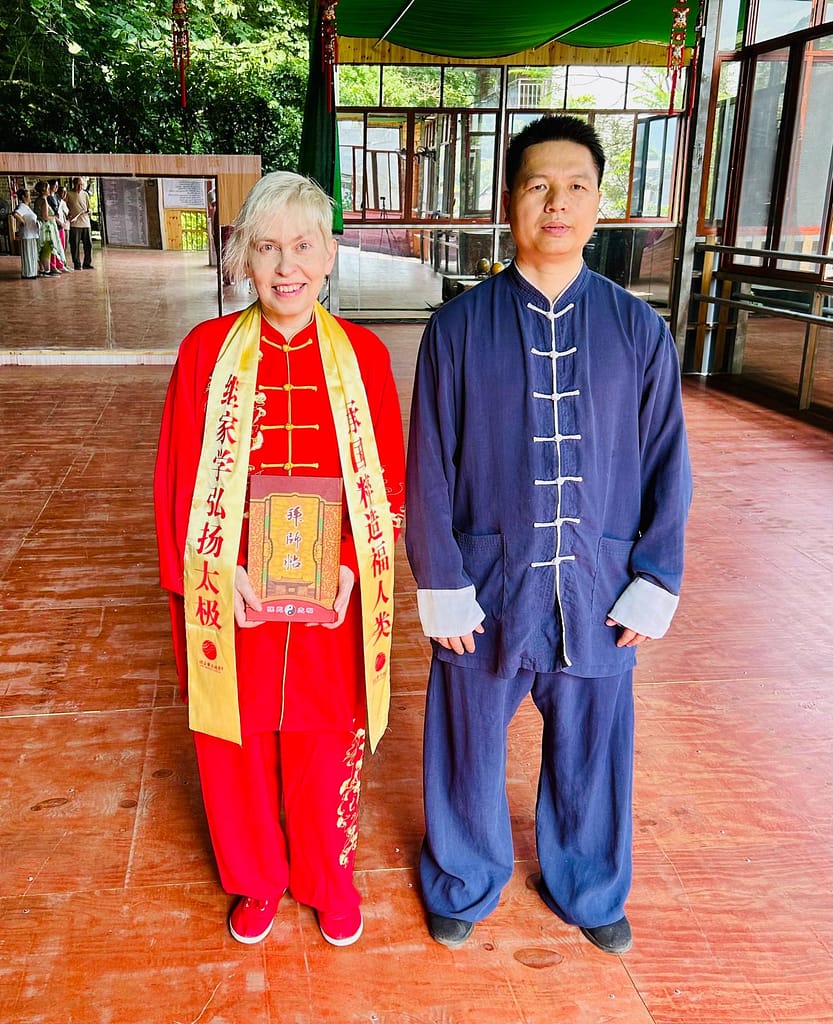
A milestone for Yulong TCM and our community: Maria has been formally accepted as a disciple of Master Kim Wu in the Chen-style Tai Chi tradition. This is not a casual certificate—it is a lineage commitment (often marked by a traditional baishi ceremony) that recognizes a student’s skill, ethics, and dedication to preserving and transmitting the art. We’re honored to share what this means for you as a patient and for our clinic’s mission.
Why this is a big deal
- Lineage matters in Tai Chi: In traditional Chinese arts, knowledge is passed person-to-person. Becoming a disciple places Maria directly within an authentic teaching line, with personal guidance and responsibility to uphold its standards.
- Depth, not just technique: Discipleship goes beyond forms. It includes internal mechanics (silk-reeling, structure, breath), martial principles, and the values of humility, respect, and service.
- Better care for our patients: The same body mechanics that make Tai Chi effective—relaxation with structure, smooth fascia chains, efficient breath—inform Maria’s approach to acupuncture, cupping, and rehabilitation advice.
- Ongoing mentorship: Maria now trains under Master Kim Wu’s direct supervision, ensuring continuous refinement and accurate transmission.
What does “Disciple” (Baishi) mean?
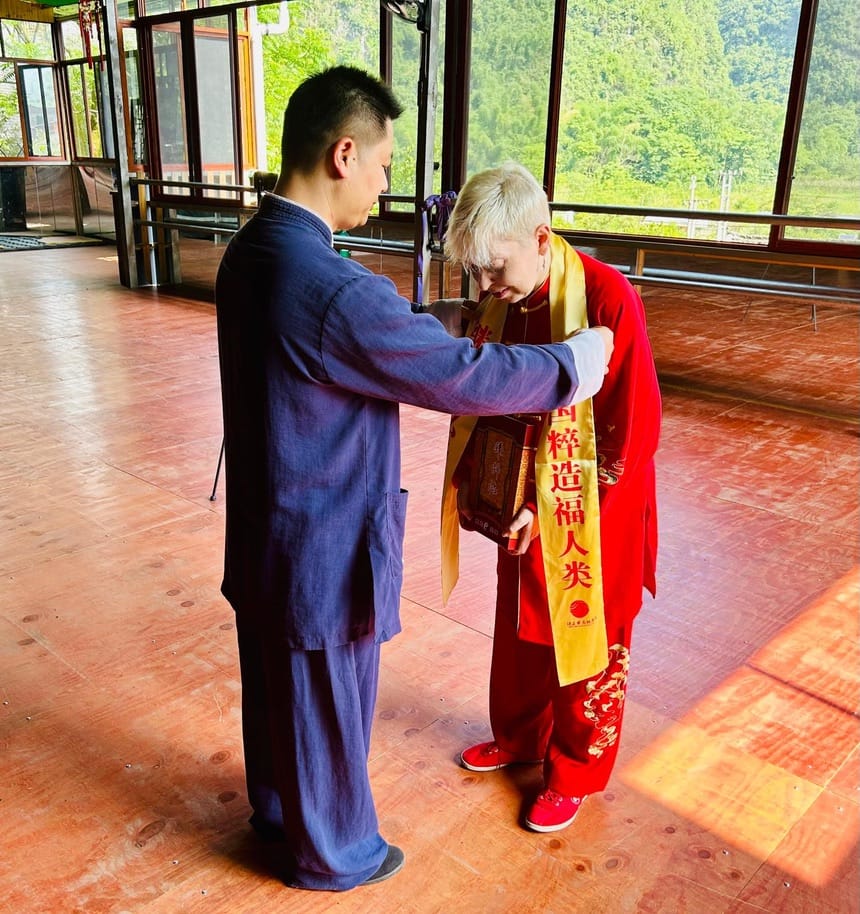
Baishi is a traditional ceremony in which a student is accepted into a master’s inner door. It is an oath of conduct and study: to train diligently, preserve the art accurately, and pass it on with integrity. For Maria, it marks years of consistent practice, clinical integration, and teaching—and the beginning of an even deeper phase of learning.
“This discipleship is a promise—to my teacher, to our patients, and to the art itself.”
— Maria van Bruggen
About Master Kim Wu
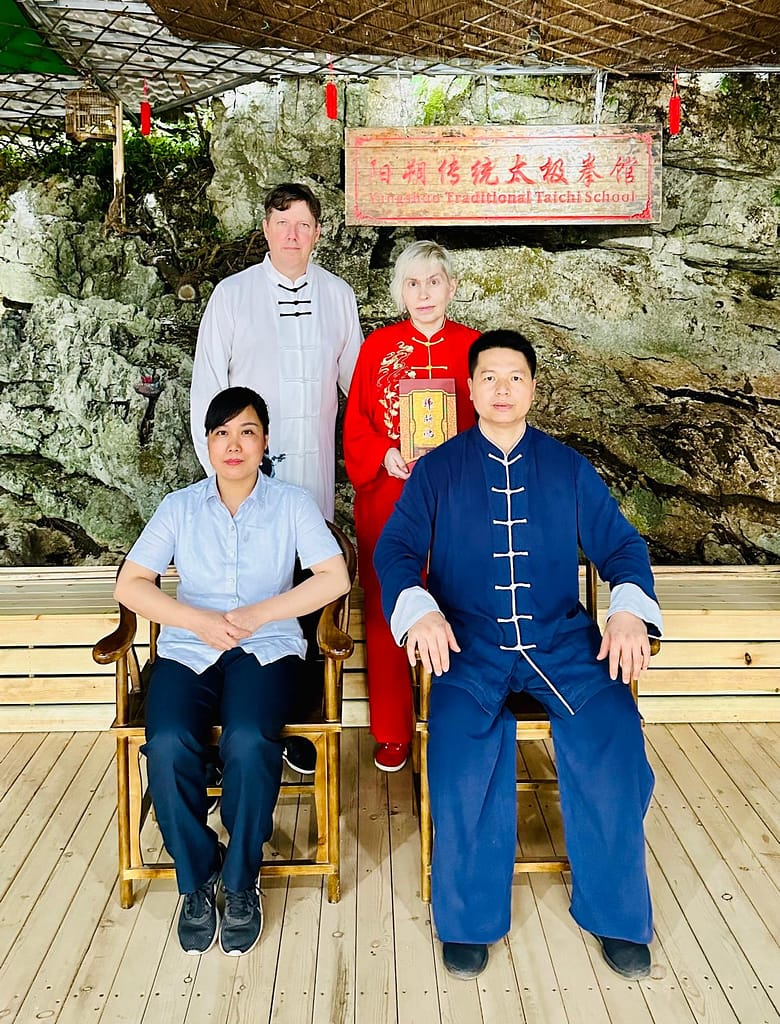
Master Kim Wu is a respected Chen-style Tai Chi teacher known for clear, principle-driven instruction. His approach emphasizes relaxed power, precise structure, and the practical integration of form, pushing hands, and internal training. Discipleship under Master Kim Wu is both an honor and a responsibility to carry forward accurate methods and ethics.
Maria will continue regular study with Master Kim Wu, deepening her understanding of movement, breath, and intent—skills that translate directly into how we guide recovery, mobility, balance, and stress regulation for our patients.
Chen-Style Tai Chi — A Short History
Chen-style Tai Chi is widely regarded as the original family system of Taijiquan, developed in the 17th century in Chenjiagou (Chen Village) by Chen Wangting. It blends internal softness with moments of explosive power (fajin), spiraling whole-body coordination (silk-reeling), and mindful breath. Over time, Chen masters transmitted the art to later branches (including Yang, Wu, and Sun styles), but Chen-style retains its hallmark coiling mechanics and martial roots.
Today, authentic Chen-style training preserves traditional long forms (such as Laojia and Xinjia), weapons practice, push-hands sensitivity, and internal conditioning—aimed at cultivation of health, structure, and clear intent.
What this means for our clinic
- Refined movement prescriptions: Patients get simple Tai Chi-based drills for posture, breath, and pain-free mobility between sessions.
- Stronger mind-body integration: Acupuncture plans are paired with calm, structured breathing and “song” (relaxed release) to reduce stress and enhance recovery.
- Workshops & classes: We will offer periodic small-group sessions to introduce Chen-style principles for health and rehabilitation.
Next steps
If you’re curious how Chen-style principles can support your health—sleep, stress, balance, or mobility—book an appointment or ask about our upcoming intro sessions. We’re happy to guide you.